AI Vending for Construction Sites
The scenario
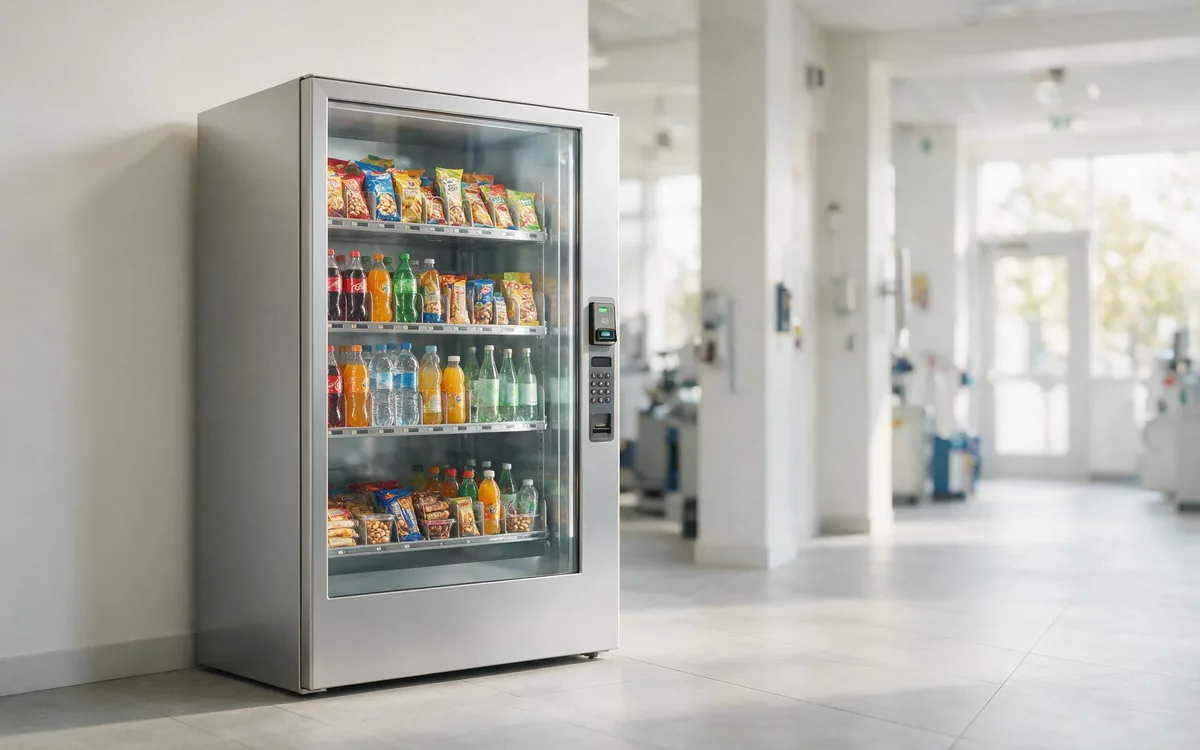
Construction sites are remote, physical, and time-boxed. Workers burn thousands of calories per shift, breaks run ten to fifteen minutes, and the nearest store is often miles away. Food trucks are unreliable, packed lunches spoil in the heat, and an off-site food run can cost a crew member 30 to 60 minutes of paid time. An AI vending unit in the site office or break trailer turns that gap into a 24/7 fuel and safety station — always open, no staff, no paperwork.
For general contractors, the unit is more than a snack machine. It is a productivity tool that keeps crews on site, a benefit that workers actually use, and — stocked with the right safety items — a quiet line of defense on OSHA-style PPE compliance. The operator handles stocking and service; the contractor provides a corner, power, and network.
Who you are serving
Construction workers are the least price-sensitive audience in vending: when a five-dollar protein bar keeps you going for three hours of physical work, it stops feeling like a luxury. The people you serve break into four groups:
- Field workers. High caloric need, short breaks, and a tight daily routine. They buy on habit — coffee before the shift, hydration and fuel at breaks, a meal at lunch.
- Night and overtime crews. The most underserved group. When food trucks and nearby diners are closed, the unit is the only option on site.
- General contractors and site managers. They care about productivity, break discipline, and PPE compliance. A well-stocked unit supports all three.
- Subcontractors and visitors. Temporary crews and inspectors add real, if unpredictable, daytime volume.
The core pain points are consistent: no nearby food, unreliable supply, short breaks, and the safety-gear moment — a torn glove or missing pair of glasses that has to be replaced immediately, not after lunch.
Why AI vending fits
- Sites are remote and isolated, so convenience has no nearby competitor — every purchase stays on site.
- Demand is tied to shift changes and breaks, making it predictable and easy to stock for.
- Breaks are short, which favors a fast grab-and-go format over queues and slow machines.
- A single unit covers hydration, food, and safety essentials in one footprint — critical when break-trailer space is tight.
- Enclosed cabinets with automatic billing keep shrinkage near zero, even in high-turnover, multi-crew environments.
- The productivity return — fewer off-site food trips — often exceeds the value of the sales themselves.
Peak buying windows
Buying follows the workday, and the workday starts early. These are the four windows that drive most sales on a typical site:
| Window | What workers buy | Why it happens |
|---|---|---|
| Pre-shift (6–7 AM) | Coffee, breakfast bars, hydration | Crews fuel up before clocking in; there is nothing else open at that hour. |
| Morning break (~9:30 AM) | Energy drinks, quick snacks | A 15-minute break needs an instant boost, not a trip. |
| Lunch cover (12–1 PM) | Full meal replacements, hydration | Food trucks are unreliable and packed lunches run out; the unit is the dependable option. |
| Afternoon heat (2–4 PM) | Electrolytes, large water | Peak heat means real hydration demand — workers lose liters of fluid per shift. |
Where to place the unit
Placement on a construction site is about meeting workers where they already stop — and keeping the unit out of the dust, mud, and traffic:
| Location | Why it works | Best stocked with |
|---|---|---|
| Site office or break trailer | The anchor. Every crew passes through at shift start, breaks, and lunch. | Coffee, meals, water, and a full safety-gear section. |
| Locker or changing area | High traffic at shift starts and ends; a natural home for PPE and personal essentials. | Gloves, glasses, earplugs, and personal-care items. |
| Entrance or gate area | Catches pre-shift coffee and breakfast for workers arriving on site. | Coffee, breakfast bars, and water. |
| Trailer parks or staging areas | Serves multiple crews without sending anyone far from the work zone. | Hydration and high-calorie snacks in bulk. |
How to choose products for this venue
Space in a break trailer is limited, so every slot has to earn its place. A three-layer mix works best on construction sites:
| Layer | Role in the unit | Example items | Margin profile |
|---|---|---|---|
| Hydration & energy | Traffic driver. Workers lose 2–3 liters of fluid per shift; these items drive multiple daily visits. | Large water bottles (1–1.5 L), sports drinks, energy drinks, iced tea. | Low to mid — but high frequency. |
| Heavy sustenance | Profit driver. High-calorie, shelf-stable food that fuels a 4,000-calorie workday. | Jerky, meat sticks, microwaveable handheld meals, protein bars, meal-replacement shakes, electrolyte powders. | High volume at strong margins. |
| Site essentials | Emergency + margin driver. A worker who rips a glove will pay eight dollars for a two-dollar pair. | Work gloves, safety glasses, earplugs, dust masks, knee pads, sunscreen, OTC pain relievers. | The highest margins in the unit, low volume. |
Rotate with the season and the weather: electrolytes, cooling towels, and SPF 50+ sunscreen fly off the shelf in summer; instant coffee, hand warmers, and thermal gloves dominate in winter. Once crews realize the unit stocks safety gear, it stops being optional — it becomes part of how the site runs.
How to arrange the shelves
Construction workers do not browse. They grab and go in under 30 seconds, so the unit has to be scannable at a glance:
| Shelf zone | What goes there | Why |
|---|---|---|
| Top shelves | Gloves, glasses, earplugs, masks, sunscreen | Safety gear at eye level signals the unit is part of the site — and catches the "I need a replacement now" moment. |
| Middle shelves (eye level) | Jerky, protein bars, meal shakes, energy drinks | The natural reach zone. Cluster high-calorie items so the standard combo — jerky plus a bar plus a drink — is one grab. |
| Bottom shelves | Large water bottles, drink multipacks | Heavy items workers will bend for, freeing eye-level space for profit items. |
Running the unit well
- Restock around shift changes: time full restocks so each incoming crew finds a full unit. Stock the night or overtime mix before the evening shift starts.
- Payments: contactless cards and mobile wallets cover everyone. No apps, no accounts.
- Meal allowances: where contractors subsidize meals or hydration, link the allowance to a worker badge or payroll account — a single tap applies the credit and any difference is charged to the worker’s card.
- PPE availability: treat safety gear like a promise. Running out of gloves or dust masks costs the unit credibility with site managers faster than any other stockout.
- Weather rotation: use the unit’s sales data to shift the mix as temperatures change; hydration-heavy in summer, warm and high-calorie in winter.
- Food safety: for anything chilled, use certified refrigerated units, log temperatures, and enforce date labels.
What success looks like
A construction unit earns its keep two ways: direct sales and recovered productivity. The sales number matters, but so do the metrics that tell you whether the unit has become part of site operations:
| Metric | What it signals |
|---|---|
| Transactions per shift | Night and overtime coverage is the key benchmark — this is the demand nobody else serves. |
| Off-site food trips avoided | The productivity return. Even a few prevented trips a day can outvalue the unit’s own P&L. |
| PPE and essentials availability | A stockout here costs more than the item’s margin — it costs site-management trust. |
| Items per transaction | The fuel-combo metric; two to three items per visit is a strong signal. |
| Waste percentage | Keep it low by rotating around shift and weather data rather than a fixed mix. |
Common mistakes to avoid
- Stocking for the day shift only. If crews work nights or weekends, their preferences must drive at least half the mix.
- Ignoring heat and hydration. On a hot site, water and electrolytes are not optional — they are the traffic engine.
- Skipping the safety-gear section. The unit that stocks gloves and masks becomes indispensable; the one that does not is just another snack machine.
- Restocking during peak breaks. Blocking the unit at 12:30 PM costs sales exactly when demand peaks.
- Forgetting the GC partnership. Placement, power, and compliance should be agreed in writing with the general contractor before installation.
Frequently asked questions
Where does the unit go on a construction site?
Inside or beside the site office or break trailer is the anchor — power exists there and the unit stays clean. Locker areas and entrance points are strong secondary spots.
What sells best on a construction site?
Water and sports drinks drive daily traffic; jerky, protein bars, and microwaveable meals drive revenue; gloves, glasses, and dust masks add the highest margins.
How do meal allowances work without slowing down the line?
The cleanest setup links an allowance to a worker badge or payroll account. A single tap applies the credit, and any personal overage is charged to the worker’s card or wallet.
Can the unit help with safety compliance?
Yes. Keeping fresh PPE — gloves, eye protection, masks, earplugs — stocked and accessible gives crews an immediate source, which supports OSHA-style compliance programs.
Who handles restocking and maintenance?
The operator owns stocking, service, and payments. The contractor provides placement, power, and site access.
Is theft a problem in break trailers?
Enclosed cabinets with automatic item detection keep shrinkage near zero, even with multiple crews and high turnover.