AI Vending for Offices
The scenario
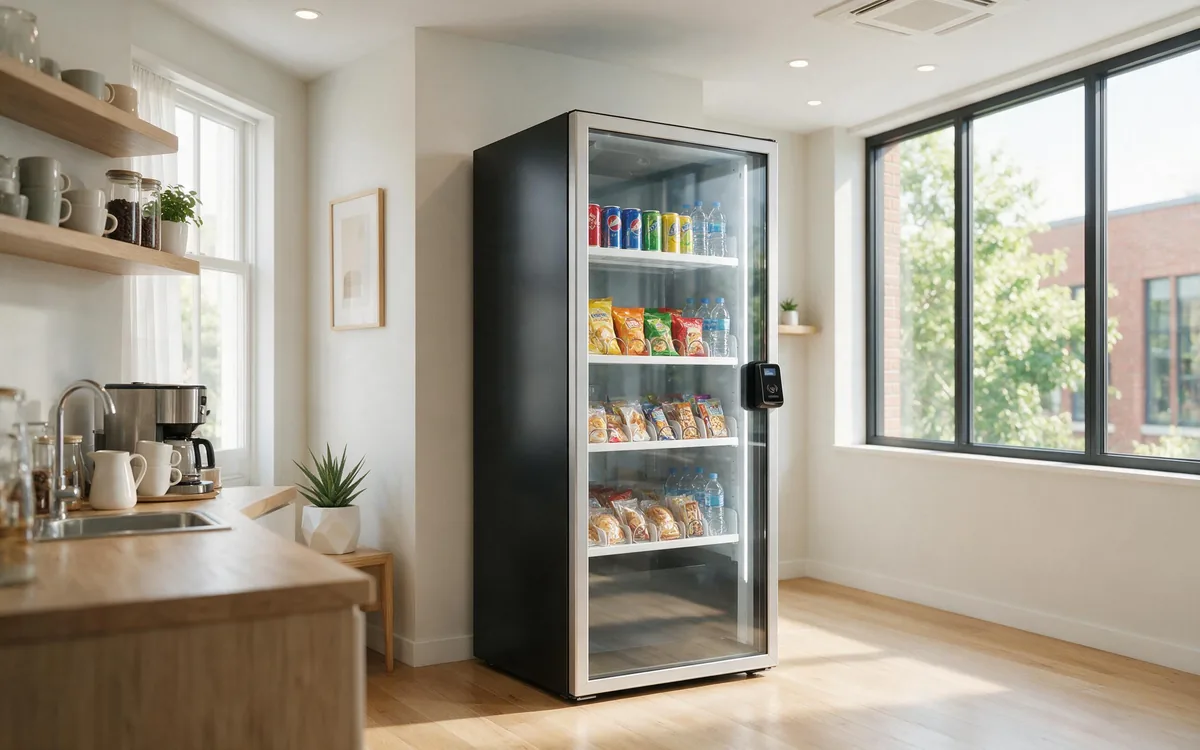
Office workers are time-rich during the day but convenience-poor. The cafeteria closes by early afternoon, the nearest café is a ten-minute walk, and the 3 PM energy crash is real. An AI vending unit placed near the break room, elevator bank, or conference area turns an underused corner into a small pantry that serves every work mode — morning coffee, lunch cover, the afternoon slump, and late-night deadlines — without adding any facilities staff.
For employers, the unit is part of the workplace experience. A well-stocked pantry reduces the friction of the workday, keeps people on the floor instead of walking to a café, and reads as a tangible perk. For operators, offices offer one of the most predictable demand curves in retail: the same people, the same hours, every working day.
Who you are serving
- Employees. High-income, health-conscious, and time-pressured. They buy on routine — morning coffee, lunch, the 3 PM snack — and they care about quality and freshness.
- Meeting-heavy roles. People who live in conference rooms buy coffee, energy bars, and quick meals between sessions.
- Late workers and early arrivals. The 7 AM and 7 PM crowds are underserved by every staffed option in the building.
- Facilities and HR. They care about employee satisfaction, cleanliness, and a perk that does not create work for them.
The defining pain point is the after-cafeteria gap. Work continues after 2 PM, and the 3–8 PM window generates real demand for snacks, coffee, and meal replacements that no staffed option serves. The second is the emergency item — a dead phone before a meeting, a sudden headache, a coffee stain on a shirt.
Why AI vending fits
- Demand is extremely predictable: the same workforce, the same hours, five days a week.
- The gap between the cafeteria closing and the end of the workday is a proven, unserved revenue window.
- Employees are health-conscious and willing to pay for fresh, functional options — the mix can be wellness-led, not junk-led.
- A unit costs the employer nothing to staff and can be offered as an employee perk with subsidized pricing if desired.
- Enclosed cabinets with automatic billing fit an office environment cleanly, with no queues and no shrinkage theater.
Peak buying windows
| Window | What employees buy | Why it happens |
|---|---|---|
| Morning coffee (7–10 AM) | Coffee, breakfast bars, hydration | Arrival fuel; the day’s first routine stop. |
| Lunch cover (12–2 PM) | Fresh food, meal replacements, drinks | The cafeteria is closed or crowded; delivery is slow and disruptive. |
| Afternoon crash (2–4 PM) | Energy bars, sparkling water, healthy snacks | The 3 PM window is a daily ritual. |
| Late work (6–8 PM) | Meal replacements, dinner alternatives | People working past the cafeteria’s hours. |
Where to place the unit
| Location | Why it works | Best stocked with |
|---|---|---|
| Break room or kitchen | The anchor. Employees already gather here, so the unit needs no discovery. | A balanced everyday mix. |
| Elevator bank or main corridor | High pass-through traffic catches the impulse purchase between meetings. | Coffee, snacks, drinks. |
| Conference floor | Meeting attendees buy 2–3 items per break; this serves the busiest hours of the day. | Coffee, energy bars, quick meals. |
| Reception or lobby | Serves employees arriving, plus visitors and delivery drivers waiting. | Coffee, water, premium snacks. |
| Wellness or fitness rooms | In larger campuses, a unit near the gym captures post-workout demand. | Water, electrolyte drinks, protein. |
How to choose products for this venue
Office buyers are health-conscious and routine-driven, so the mix should feel like a curated pantry — wellness-forward with a little indulgence:
| Layer | Role in the unit | Example items | Margin profile |
|---|---|---|---|
| Hydration & afternoon fuel | Traffic driver. Replaces the junk-soda default with a daily ritual. | Premium bottled water, sparkling water, cold brew, clean energy drinks, unsweetened iced tea. | Low to mid, high frequency. |
| Fresh food & clean nutrition | Profit driver. Competes with food delivery — fast, healthy, and already on the floor. | Microwaveable gourmet meals, wraps, salads, yogurt, protein bars, popcorn. | Premium. |
| Workplace essentials | Margin driver. Solves the mid-day crisis at the highest margins. | Phone cables, earbuds, OTC pain relievers, hand lotion, breath mints, stain-remover pens. | Highest in the unit. |
Recognizable healthy brands outsell generic snacks by a wide margin. Rotate seasonally and test one new item every few weeks — the workforce changes, so the mix should too.
How to arrange the shelves
Employees browse quickly between tasks, so the unit must look organized and curated — like a premium pantry, not a machine:
| Shelf zone | What goes there | Why |
|---|---|---|
| Top shelves | Chargers, earbuds, pain relievers, hand lotion | The eye-level reminder for "I need this" moments. |
| Middle shelves (eye level) | Fresh sandwiches, cold brew, protein boxes, premium snacks | The lunch and afternoon-energy zone — most natural reach. |
| Bottom shelves | Large water bottles, sparkling water, heavier drinks | The staples employees reach for. |
Keep wellness-forward items prominent and front-facing. Clean, bright, labeled shelves signal quality, which is what office buyers respond to.
Running the unit well
- Restock rhythm: a full restock twice a week with a quick top-up mid-week usually covers a standard office. Time restocks around, not during, peak break hours.
- Payments: contactless cards and mobile wallets are essential. No apps, no accounts — employees want a tap and go.
- Employee perks: if the company wants to subsidize snacks or coffee, credits can be tied to employee accounts or badges through the operator’s platform, with no checkout friction.
- Fresh food discipline: refrigerated units need temperature logging and date labeling; remove unsold fresh items on a fixed schedule to protect quality and trust.
- Data: use sales data to match stock to the workweek — Monday and Tuesday mornings sell different things than Friday afternoons.
Recommended machine configuration
A standard spec sheet covers most offices locations. Confirm the details with your vendor, but this is a sensible starting point:
| Configuration | Recommended |
|---|---|
| Form factor | Smart fridge or open-shelf cabinet |
| Capacity | 4-8 shelves |
| Payments | NFC, QR, mobile wallets |
| Connectivity | Wi-Fi or 4G/5G |
| Venue specifics | Employee badge / meal-allowance integration, quiet operation |
What success looks like
An office unit’s health is best read through adoption, not a single revenue number. Track:
| Metric | What it signals |
|---|---|
| Adoption rate | The share of employees who buy in a given week — the metric that predicts everything else. |
| Transactions per day | The morning and 3 PM windows are the benchmarks. |
| Items per transaction | Whether merchandising is driving multi-item grabs like coffee plus a snack. |
| Fresh-food sell-through | Waste above a small threshold means the mix or cadence is off. |
| Employee satisfaction signals | Internal feedback and usage growth are the real return for HR and facilities. |
Common mistakes to avoid
- Stocking like a break-room afterthought. Chips and soda alone underperform a wellness-led mix in an office.
- Pricing healthy options too high. The 3 PM snack should be an easy yes, not a decision.
- Ignoring fresh food. The lunch and dinner-alternative windows are the revenue engine; skipping them leaves money on the table.
- Restocking during peak hours. Blocking the unit at 12:30 PM is a direct hit to sales.
- Forgetting the facilities partnership. Placement, cleaning, and power should be agreed before installation, not discovered after.
Frequently asked questions
What sells best in an office?
Water, coffee, and cold brew drive daily traffic; fresh meals, protein bars, and healthy snacks drive revenue in the lunch and afternoon windows.
Should the employer subsidize items?
Many companies do — often by pricing coffee or snacks at cost or via a monthly credit per employee. It is a cheap, visible perk that drives adoption.
How do employees pay?
Contactless cards and mobile wallets. If the company offers credits, they can be tied to employee accounts or badges so a tap applies them automatically.
Who restocks and maintains the unit?
The operator handles stocking, maintenance, and payments. Facilities only coordinates placement, power, and cleaning.
Is fresh food risky in an office?
It has more waste risk than packaged snacks, so start small, label dates, and let sales data decide how much to carry.