Cashless vs. Cash Vending: What Actually Matters
Updated August 2026 · Editorial Team · 5 min read
Cashless vending typically lifts sales and lowers collection costs, but the right choice depends on your audience, location, and fee structure.
On this page
TL;DR
Cashless payment usually increases transactions and eliminates cash handling, but it adds processing fees and can exclude unbanked customers. Most AI vending deployments are cashless-only.
What does cashless vending mean?
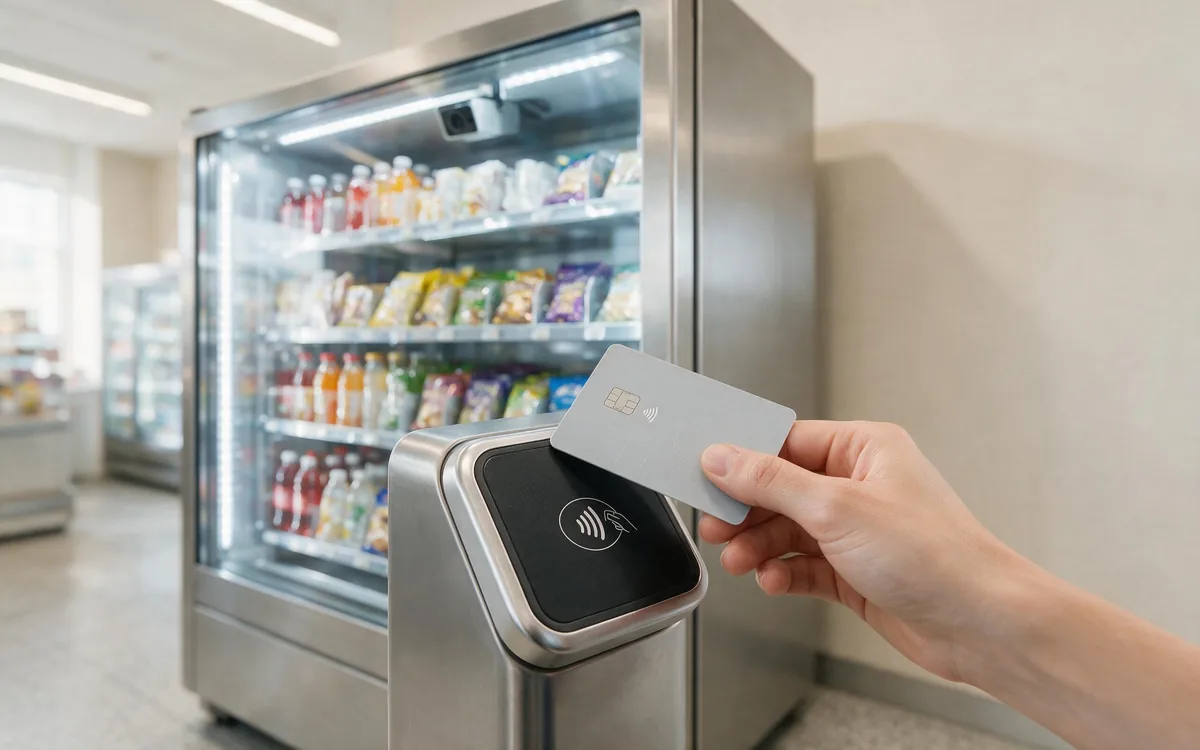
Cashless vending accepts cards, mobile wallets, or app payments instead of coins and bills. AI vending machines are cashless by design because automatic charging requires an electronic payment token.
How it works
- The shopper taps a card or scans a QR code.
- The payment terminal authorizes the payment method.
- The machine charges after the transaction completes.
- Funds settle through the payment provider, usually within days.
Cashless vs. cash
| Factor | Cashless | Cash |
|---|---|---|
| Transaction speed | Fast | Slow, coin handling |
| Sales uplift | Typically +10 to +25 percent | Baseline |
| Handling cost | Low | Collection and counting |
| Fees | Processing fees per transaction | None |
| Audience | Banked, card users | Unbanked, tourists |
Fee structures to know
- Per-transaction percentage fees from the processor.
- Monthly terminal or telemetry fees from the payment provider.
- Interchange fees set by card networks, which vary by card type.
When cash still makes sense
- Locations with many cash-only customers, such as some transit hubs.
- Markets where card penetration is low.
- Compliance requirements in certain regions.
Recommendations
For most AI vending deployments, start cashless-only: it simplifies the hardware, lifts basket size, and removes collection trips. Add a cash acceptor only where data says your audience needs it.