Location Selection Guide for AI Vending
Location decides success more than hardware. This guide scores candidate sites on traffic, dwell time, utilities, and deal structure.
Quick answer
Score every candidate on traffic volume, 24/7 access, power and network, and deal terms. A mediocre unit at a great location beats a great unit at a bad one.
Scoring criteria
| Criterion | What to check |
|---|---|
| Foot traffic | Counts and peak patterns |
| Dwell time | Are people waiting or passing through? |
| Access hours | 24/7 vs. restricted hours |
| Utilities | Power, network, cleanliness |
| Deal terms | Rent, revenue share, exit |
Traffic vs. dwell
High traffic with no dwell time (a transit corridor) underperforms moderate traffic with waiting time (a break room or lobby). Dwell time creates impulse purchases.
Red flags
- Existing free food programs that suppress sales.
- Unreliable power or network at the site.
- Venue contacts without authority to sign agreements.
- Locations with no cleaning or maintenance commitment.
Deal structure
- Prefer revenue-share or low-fixed-rent deals for pilot locations.
- Clarify who handles power, cleaning, and security.
- Include a trial period with clear exit terms.
Validation plan
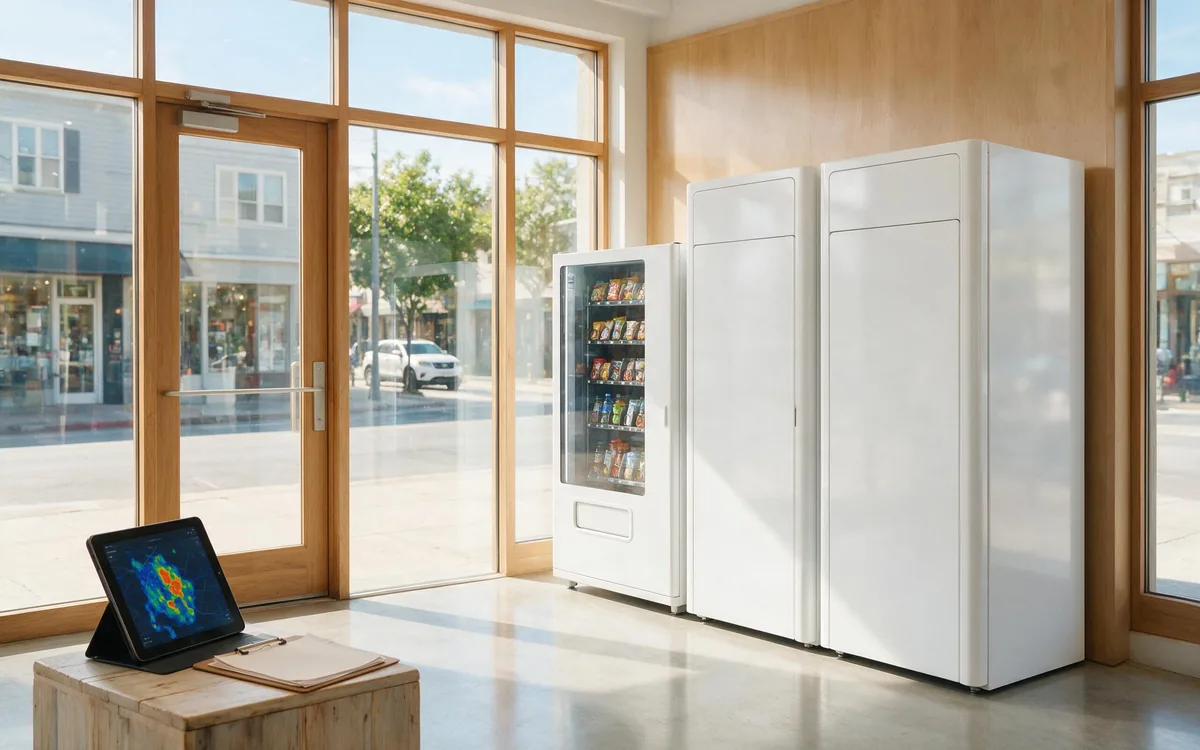
- Observe traffic at different times for one week.
- Deploy a pilot unit for 60 to 90 days.
- Measure transactions, basket size, and spoilage.
- Expand only when the pilot meets your targets.